Last updated: May 2026. Most Hanoi trips are remembered for food, coffee, street life, and people helping more than expected. Still, first-time visitors are easier targets when they are tired, distracted, carrying luggage, counting cash, or trying to solve transport and directions at the same time.
This guide explains common Hanoi scams and safety red flags without turning the city into a horror story. Use it before arrival, then keep our Hanoi travel hub open for wider planning.
Quick Answer: How Do You Avoid Hanoi Scams?
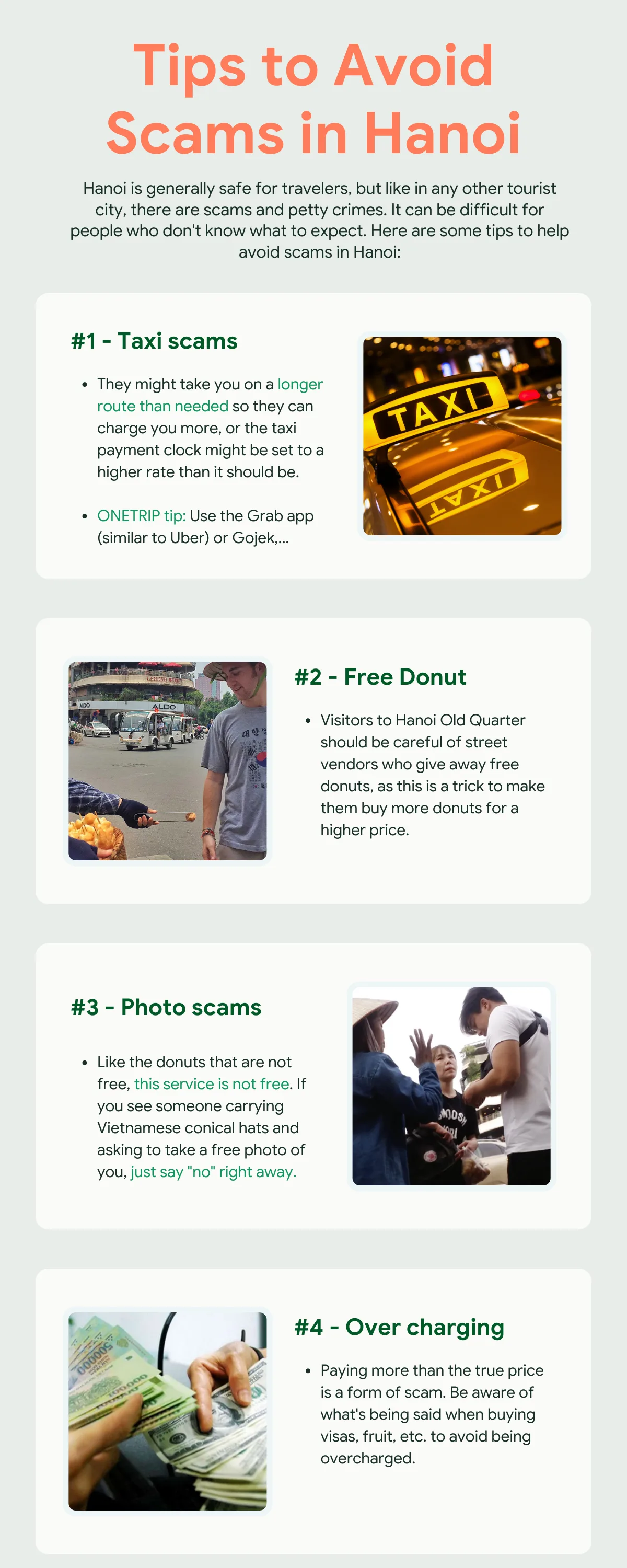
Plan the vulnerable moments before they happen. Know your arrival transport, confirm the ride and price channel you use, change money deliberately, book tours from a source you trust, and slow down when a stranger creates urgency around your phone, cash, bag, or next move.
| Situation | Red flag | Safer move |
|---|---|---|
| Airport or station arrival | Someone pressures you to change your planned ride | Use the pickup, app ride, or clearly identified service you already chose |
| Taxi or ride | Vehicle details, meter, route, or price channel do not match what you expected | Pause before entering and re-check booking details |
| Tour booking | Urgent discount, copied brand name, or payment request outside the channel you trust | Verify the official page/contact before paying |
| Street interaction | “Free” photo, food, prop, or help turns into pressure | Say no early and keep moving if you do not want the exchange |
| Cash | Fast counting, confusing rate talk, or visible pressure | Count calmly, use a trusted exchange option, keep small notes separate |
Official travel advice also points travelers toward ordinary precautions. The U.S. State Department Vietnam country page notes petty crime can happen in tourist and crowded areas, while the UK Vietnam safety advice recommends pre-arranged transport or official taxi-hailing apps where possible. Check official advice for your own nationality before travel.
1. Arrival and Taxi Scams
Arrival is when confusion costs the most. You may be jet-lagged, your data connection may be weak, and a short ride can feel urgent. That is why you should decide your plan before you walk out with luggage.
- Save your hotel name, address, and one contact method offline.
- Use the pickup or ride channel you chose instead of following a last-second verbal offer.
- Check the vehicle and driver details if you use an app-based ride.
- If you use a taxi, choose a clearly identified service and clarify how the fare is handled before you relax into the ride.
- At stations, step away from pressure before opening maps, cash, or booking apps.
For the transport layer beyond scams, read our Hanoi transportation guide.
2. Fake Tours and Copycat Booking Offers
A fake or misleading tour offer often works by borrowing trust: a familiar destination name, a copied photo, an “only today” price, or a message that tries to move payment away from the channel where you found the company. The risk is not only losing money. It can also burn a day of a short trip.
- Book from the official tour page or a marketplace you trust.
- Check the exact business name, URL, and tour details before paying.
- Be careful with rushed deposits sent to a new account from a random chat message.
- Ask what is included if a price seems unusually cheap.
- Keep confirmation details and the contact thread after booking.
OneTrip tours are listed on the official OneTrip tours page. If a message about one of our experiences feels off, verify before paying.
3. Money Exchange and Cash Confusion
Vietnamese dong has large numbers. That alone can create mistakes when you are tired. The most useful habit is not paranoia. It is slowing down.
- Check the rate and the amount before you hand over a large sum.
- Count returned cash where you can focus.
- Keep small notes easy to reach and larger notes separate.
- Do not pull out a thick cash stack in a busy roadside moment.
- If a rate, fee, or exchange process feels confusing, walk away and choose a clearer option.
For practical cash planning, continue to where to exchange money in Hanoi.
4. “Free” Photos, Snacks, Props, and Street Help
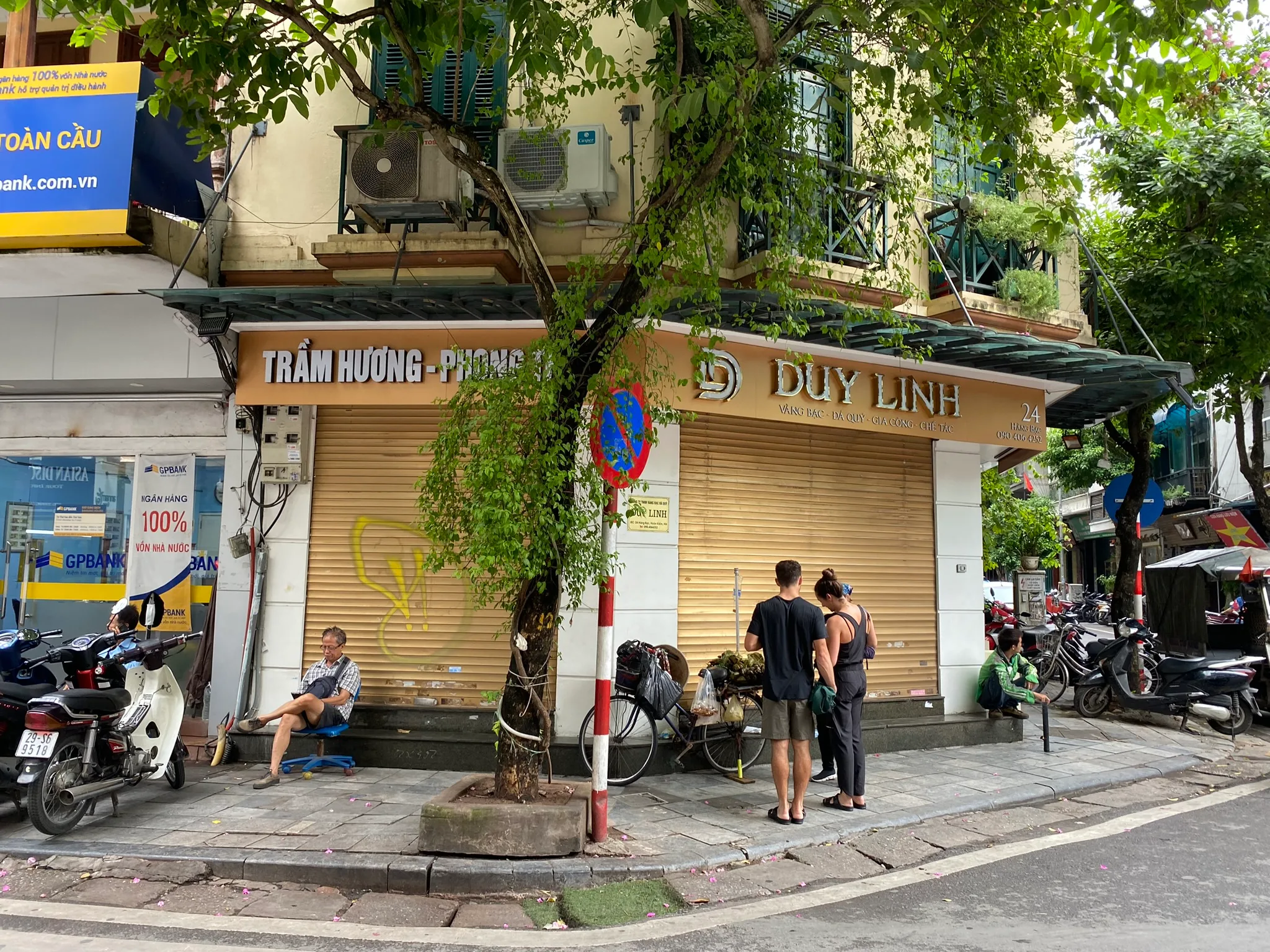
Some Hanoi interactions are genuinely warm. Some begin with a “free” prop, photo, food sample, shoe help, or friendly interruption and end with pressure for money. You do not need to debate every offer. You need a clean exit when you do not want the exchange.
- Say no before taking the prop, food, or pose if you are unsure.
- Do not hand your phone to a stranger for a photo unless you are comfortable with that risk.
- Keep walking if someone turns a polite refusal into pressure.
- If you do want a paid photo or small purchase, agree the expectation first.
5. Pickpocketing and Bag Snatch Risk
Busy places deserve busy-place habits. Markets, crowded crossings, nightlife streets, lake events, and tourist clusters are moments to keep phones and bags deliberate. Do not leave a phone loose near the road while filming traffic. Do not hang a bag where you cannot feel it in a dense crowd.
- Use a zipped bag and keep it close in crowded areas.
- Keep passports and backup cards separate from casual spending cash.
- Watch roadside phone use if motorbikes pass close.
- Have a simple late-night return plan before drinking.
- Travel solo with the same city habits you would use in any busy destination.
Solo travelers can also use our Hanoi solo traveler guide for pacing, confidence, and neighborhood choices.
What to Do If Something Goes Wrong
- Move to a calmer place before arguing, counting cash, or opening every app on your phone.
- Write down what happened while details are fresh: time, place, ride/tour details, screenshots, receipts, and names if available.
- Contact your bank, insurer, booking platform, hotel, or travel provider when relevant.
- For serious theft, passport loss, or safety incidents, use official local and consular guidance for reporting steps.
- Do not let one bad interaction turn the rest of the trip into suspicion. Adjust the weak point and keep going.
A Safer First Day in Hanoi
Scam prevention gets easier once the city feels legible. Keep your first day simple: arrival, check-in, data and money setup, one short walk, one comfortable meal, and one route you understand. Our Hanoi travel tips are built for that exact first-trip friction.
If you want local orientation instead of figuring out traffic, food, and neighborhood rhythm alone after arrival, the Hanoi First Day experience is the right conversion bridge here. It is not about being scared of Hanoi. It is about starting with clearer eyes.
Hanoi Scams FAQ
Is Hanoi safe for tourists?
Many travelers visit Hanoi smoothly. Use normal city awareness, protect phones and bags in crowded or roadside situations, and plan arrival transport and payments deliberately.
Are all street offers in Hanoi scams?
No. Hanoi has genuine hospitality and ordinary commerce. The useful filter is pressure: unclear cost, unwanted urgency, or someone trying to take control of your ride, phone, cash, or booking decision.
What should I check before booking a Hanoi tour?
Check the official page or trusted channel, exact tour name, inclusions, payment path, contact details, and cancellation information. Save your confirmation after payment.